Publications
2026
-
Qudit stabilizer codes for ZN lattice gauge theories with matter
Luca Spagnoli, Alessandro Roggero, and Nathan Wiebe
arXiv:2602.20661 [quant-ph] ()In this work we extend the connection between Quantum Error Correction (QEC) and Lattice Gauge Theories (LGTs) by showing that a \(ZN\) gauge theory with prime dimension \(N\) coupled to dynamical matter can be expressed as a qudit stabilizer code. …
-
Improving Quantum Multi-Objective Optimization with Archiving and Substitution
Linus Ekstrom, Takafumi Hosogi, Xavier Bonet-Monroig, Sebastian Schmitt, Hao Wang, and Thomas Bäck
Presented at The 11th International Conference on Machine Learning, Optimization, and Data Science (LOD) 2025 ()Finding optimal solutions of conflicting objectives is a daily matter in many industrial applications, with multi-objective optimization trying to find the best solutions to them. The advent of quantum computing has led to researchers wondering if …
-
Fault-tolerant simulation of Lattice Gauge Theories with gauge covariant codes
Luca Spagnoli, Alessandro Roggero, and Nathan Wiebe
Quantum 10, 1968 () | arXiv:2405.19293 [quant-ph]We show in this paper that a strong and easy connection exists between quantum error correction and Lattice Gauge Theories (LGT) by using the Gauge symmetry to construct an efficient error-correcting code for Abelian \(Z2\) LGTs. We identify the …
2025
-
Device-independent Shannon entropy certification
Robert Okuła and Remigiusz Augusiak
New J. Phys. 27 114519 () | arXiv:2505.05395 [quant-ph]Quantum technologies promise information processing and communication technology advancements, including random number generation (RNG). Using Bell inequalities, a user of a quantum RNG hardware can certify that the values provided by an untrusted …
-
Entanglement witnesses for stabilizer states and subspaces beyond qubit
Jakub Szczepaniak, Owidiusz Makuta, and Remigiusz Augusiak
Rep. Prog. Phys. 88 117602 () | arXiv:2508.13734 [quant-ph]Genuine multipartite entanglement (GME) is arguably the most valuable form of entanglement in the multipartite case with application for instance in quantum metrology. In order to detect that form of entanglement in multipartite quantum states, one …
-
Superresolving collective quantum measurements
J. O. de Almeida, M. Lewenstein, and M. Skotiniotis
Phys. Rev. A 112, 052605 () | arXiv:2110.00986 [quant-ph]We demonstrate a method for superresolving signals encoded as finite mixtures of bosonic modes using collective measurements that exploit permutation symmetry. Specifically, we use multiple copies of the state 𝜌 of the finite mixture to extract an …
-
Deep Neural Network-assisted improvement of quantum compressed sensing tomography
Adriano Macarone-Palmieri, Leonardo Zambrano, Maciej Lewenstein, Antonio Acín, and Donato Farina
Phys. Scr. 100 115106 () | arXiv:2405.10052 [quant-ph]Quantum compressed sensing is a fundamental technique for tomographic reconstruction of low-rank density matrices in informationally incomplete scenarios. However, when the available measurement data is insufficient, standard compressed sensing, like …
-
Inequality constraints in variational quantum circuits with qudits
Alberto Bottarelli, Sebastian Schmitt, and Philipp Hauke
Phys. Rev. Research 7, 033202 () | arXiv:2410.07674 [quant-ph] | Zenodo data repositoryQuantum optimization is emerging as a prominent candidate for exploiting the capabilities of near-term quantum devices. Many application-relevant optimization tasks require the inclusion of inequality constraints, usually handled by enlarging the …
-
All genuinely entangled stabilizer subspaces are multipartite fully nonlocal
Owidiusz Makuta and Remigiusz Augusiak
npj Quantum Inf 11, 144 () | arXiv:2312.08757 [quant-ph]Understanding which entangled states give rise to Bell nonlocality and thus are resourceful in the device-independent framework is a long-standing unresolved problem. Here, we establish the equivalence between genuine entanglement and genuine …
-
Nonperturbative signatures of fractons in the twisted multiflavor Schwinger Model
Pavel P. Popov, Valentin Kasper, Maciej Lewenstein, Erez Zohar, Paolo Stornati, and Philipp Hauke
Phys. Rev. D 112, 014515 () | arXiv:2405.00745 [hep-lat] | Zenodo data repositoryGauge-field configurations with nontrivial topology have profound consequences for the physics of Abelian and non-Abelian gauge theories. Over time, arguments have been gathering for the existence of gauge-field configurations with fractional …
-
Symmetry verification for noisy quantum simulations of non-Abelian lattice gauge theories
Edoardo Ballini, Julius Mildenberger, Matteo M. Wauters, and Philipp Hauke
Quantum 9, 1802 () | arXiv:2412.07844 [quant-ph] | Zenodo data repositoryNon-Abelian gauge theories underlie our understanding of fundamental forces of modern physics. Simulating them on quantum hardware is an outstanding challenge in the rapidly evolving field of quantum simulation. A key prerequisite is the protection …
-
String breaking dynamics in Ising chain with local vibrations
Arindam Mallick, Maciej Lewenstein, Jakub Zakrzewski, and Marcin Płodzie
Phys. Rev. B 112, 024311 () | arXiv:2501.00604 [quant-ph]We consider the dynamics in the one-dimensional quantum Ising model in which each spin coherently interacts with its phononic mode. The model is motivated by quantum simulators based on Rydberg atoms in tweezers or trapped ions. The configuration of …
-
Many-body quantum resources of graph states
Marcin Płodzień, Maciej Lewenstein, and Jan Chwedeńczuk
Rep. Prog. Phys. 88 077601 () | arXiv:2410.12487 [quant-ph]Characterizing the non-classical correlations of a complex many-body system is an important part of quantum technologies. An ideal tool for this task would scale well with the size of the system, be easily computable and be easily measurable. In this …
-
Efficient Qudit Circuit for Quench Dynamics of \(2+1D\) Quantum Link Electrodynamics
Rohan Joshi, Michael Meth, Jan C. Louw, Jesse J. Osborne, Kevin Mato, Martin Ringbauer, and Jad C. Halimeh
arXiv:2507.12589 [quant-ph] ()A major challenge in the burgeoning field of quantum simulation for high-energy physics is the realization of scalable \(2+1\)D lattice gauge theories on state-of-the-art quantum hardware, which is an essential step towards the overarching goal of …
-
Emanuele Gaz, Pavel P. Popov, Guy Pardo, Maciej Lewenstein, Philipp Hauke, and Erez Zohar
Phys. Rev. Research 7, 033012 () | arXiv:2501.17863 [hep-lat] | Zenodo data repositoryQuantum simulation of lattice gauge theories (LGTs) provides a powerful framework for understanding nonperturbative phenomena. However, to realize the hope of answering challenging physics questions on near-term devices it is crucial to develop …
-
Symmetry-Protected Topological Haldane Phase on a Qudit Quantum Processor
C.L. Edmunds, E. Rico, I. Arrazola, G.K. Brennen, M. Meth, R. Blatt, and M. Ringbauer
PRX Quantum 6, 020349 () | arXiv:2408.04702 [quant-ph] | Zenodo data repositorySymmetry-protected topological phases have fundamentally changed our understanding of quantum matter. An archetypal example of such a quantum phase of matter is the Haldane phase, containing the spin-1 Heisenberg chain. The intrinsic quantum nature …
-
Certifying classes of d-outcome measurements with quantum steering
Alexandre C. Orthey and Remigiusz Augusiak
New J. Phys. 27 064501 () | arXiv:2410.20477 [quant-ph]Device-independent (DI) certification schemes are based on minimal assumptions about the quantum system under study, which makes the most desirable among certification schemes. However, they are often the most challenging to implement. In order to …
-
Device-Independent Quantum Key Distribution beyond qubits
Javier Rivera-Dean, Anna Steffinlongo, Neil Parker-Sánchez, Antonio Acín, and Enky Oudot
New J. Phys. 27 054512 () | arXiv:2402.00161 [quant-ph] | GithubDevice-independent quantum key distribution (DIQKD) aims to generate secret keys between two parties without relying on trust in their employed devices, imposing strict constraints on the experimental conditions needed for successful key generation. …
-
Jens Engel, Andrea Castellani, Patricia Wollstadt, Felix Lanfermann, Thomas Schmitt, Sebastian Schmitt, Lydia Fischer, Steffen Limmer, David Luttropp, Florian Jomrich, René Unger, and Tobias Rodemann
Sci Data 12, 864 () | arXiv:2503.11469 [eess.SY] | Data repositoryWe present a large real-world dataset obtained from monitoring a smart company facility over the course of six years, from 2018 to 2023. The dataset includes energy consumption data from various facility areas and components, energy production data …
-
Quantum algorithms for inverse participation ratio estimation in multiqubit and multiqudit systems
Yingjian Liu, Piotr Sierant, Paolo Stornati, Maciej Lewenstein, and Marcin Płodzień
Phys. Rev. A 111, 052614 () | arXiv:2405.03338 [quant-ph] | GithubInverse participation ratios (IPRs) and the related participation entropies quantify the spread of a quantum state over a selected basis of the Hilbert space, offering insights into the equilibrium and nonequilibrium properties of the system. In this …
-
Anderson localization induced by structural disorder
Sourav Bhattacharjee, Piotr Sierant, Marek Dudyński, Jan Wehr, Jakub Zakrzewski, and Maciej Lewenstein
Phys. Rev. B 111, L180202 () | arXiv:2411.10247 [cond-mat.dis-nn]We examine the onset of Anderson localization in three-dimensional systems with structural disorder in form of lattice irregularities and in the absence of any on-site disordered potential. Analyzing two models with distinct types of lattice …
-
Variational quantum multiobjective optimization
Linus Ekstrom, Hao Wang, and Sebastian Schmitt
Phys. Rev. Research 7, 023141 () | arXiv:2312.14151 [quant-ph] | GithubSolving combinatorial optimization problems on near-term quantum devices has gained a lot of attention in recent years. Currently, most studies have focused on single-objective problems, whereas many real-world applications need to consider multiple, …
-
Unveiling Eigenstate Thermalization for Non-Hermitian systems
Sudipto Singha Roy, Soumik Bandyopadhyay, Ricardo Costa de Almeida, and Philipp Hauke
Phys. Rev. Lett. 134, 180405 () | arXiv:2309.00049 [quant-ph]The eigenstate thermalization hypothesis (ETH) has been highly influential in explaining thermodynamic behavior of closed quantum systems. As of yet, it is unclear whether and how the ETH applies to non-Hermitian systems. Here, we introduce a …
-
Slow decay rate of correlations induced by long-range extended Dzyaloshinskii-Moriya interactions
Tanoy Kanti Konar, Leela Ganesh Chandra Lakkaraju, and Aditi Sen De
Phys. Rev. A 111, 052402 () | arXiv:2407.21668 [quant-ph] | Zenodo data repositoryWe examine the impact of long-range Dzyaloshinskii-Moriya (DM) interaction in the extended \(XY\) model on the phase diagram as well as the static and dynamical properties of quantum and classical correlation functions. It is known that in the …
-
Quantum-enhanced sensing with variable-range interactions
Monika Mothsara, Leela Ganesh Chandra Lakkaraju, Srijon Ghosh, and Aditi Sen De
Phys. Rev. A 111, 042628 () | arXiv:2307.06901 [quant-ph] | Zenodo data repositoryThe typical bound on parameter estimation, known as the standard quantum limit (SQL), can be surpassed by exploiting quantum resources such as entanglement. To estimate the magnetic probe field, we propose a quantum sensor based on a variable-range …
-
A Monte Carlo Tree Search approach to QAOA: finding a needle in the haystack
Andoni Agirre, Evert van Nieuwenburg, and Matteo M Wauters
New J. Phys. 27 043014 () | arXiv:2408.12648 [quant-ph] | Zenodo data repositoryThe search for quantum algorithms to tackle classical combinatorial optimization problems has long been one of the most attractive yet challenging research topics in quantum computing. In this context, variational quantum algorithms (VQAs) are a …
-
Temporal Bell inequalities in non-relativistic many-body physics
A. Tononi and M. Lewenstein
Quantum Sci. Technol. 10 03LT01 () | arXiv:2409.17290 [quant-ph]Analyzing the spreading of information in many-body systems is crucial to understanding their quantum dynamics. At the most fundamental level, this task is accomplished by Bell inequalities, whose violation by quantum mechanics implies that …
-
Qudit-native measurement protocol for dynamical correlations using Hadamard tests
Pavel P. Popov, Kevin T. Geier, Valentin Kasper, Maciej Lewenstein, and Philipp Hauke
Phys. Rev. A 111, 042604 () | arXiv:2407.03421 [quant-ph]Dynamical correlations reveal important out-of-equilibrium properties of the underlying quantum many-body system, yet they are notoriously difficult to measure in experiments. While measurement protocols for dynamical correlations based on Hadamard …
-
Quantum Algorithms in Practice: Application to Ground-State Energy Estimation
Oriel Kiss, Utkarsh Azad, Borja Requena, Alessandro Roggero, David Wakeham, and uan Miguel Arrazol
Quantum 9, 1682 ()We investigate the feasibility of early fault-tolerant quantum algorithms focusing on ground-state energy estimation problems. In particular, we examine the computation of the cumulative distribution function (CDF) of the spectral measure of a …
-
Symmetry-protection Zeno phase transition in monitored lattice gauge theories
Matteo M. Wauters, Edoardo Ballini, Alberto Biella, and Philipp Hauke
Phys. Rev. B 111, 094315 () | arXiv:2405.18504 [quant-ph, hep-lat] | Zenodo data repositoryQuantum measurements profoundly influence system dynamics. They lead to complex nonequilibrium phenomena like the quantum Zeno effect, and they can be used for mitigating errors in quantum simulations. Such an ability is particularly valuable for …
-
Simulating two-dimensional lattice gauge theories on a qudit quantum computer
Michael Meth, Jinglei Zhang, Jan F. Haase, Claire Edmunds, and Lukas Postler et al.
Nat. Phys. 21, 570–576 () | arXiv:2310.12110 [quant-ph] | Zenodo data repositoryParticle physics describes the interplay of matter and forces through gauge theories. Yet, the intrinsic quantum nature of gauge theories makes important problems notoriously difficult for classical computational techniques. Quantum computers offer a …
-
Genuine multipartite entanglement in quantum optimization
Gopal Chandra Santra, Sudipto Singha Roy, Daniel J. Egger, and Philipp Hauke
Phys. Rev. A 111, 022434 () | arXiv:2411.08119 [quant-ph] | Zenodo data repositoryThe ability to generate bipartite entanglement in quantum computing technologies is widely regarded as pivotal. However, the role of genuinely multipartite entanglement is much less understood than bipartite entanglement, particularly in the context …
-
Kacper Cybiński, Marcin Płodzień, Michał Tomza, Maciej Lewenstein, Alexandre Dauphin, and Anna Dawid
Mach. Learn.: Sci. Technol. 6 015014 ()Machine learning (ML) is a promising tool for the detection of phases of matter. However, ML models are also known for their black-box construction, which hinders understanding of what they learn from the data and makes their application to novel …
-
Engineering a Josephson junction chain for the simulation of the quantum clock model
Matteo M. Wauters, Lorenzo Maffi, and Michele Burrello
Phys. Rev. B 111, 045418 () | arXiv:2408.14549 [cond-mat.mes-hall] | Zenodo data repositoryThe continuous improvement of fabrication techniques and high-quality semiconductor-superconductor interfaces allows for an unprecedented tunability of Josephson junction arrays (JJA), making them a promising candidate for analog quantum simulations …
-
Cold-atom quantum simulators of gauge theories
Jad C. Halimeh, Monika Aidelsburger, Fabian Grusdt, Philipp Hauke, and Bing Yang
Nat. Phys. 21, 25–36 ()Gauge theories constitute the basis of the Standard Model and provide useful descriptions of various phenomena in condensed matter. Realizing gauge theories on tunable tabletop quantum devices such as cold-atom quantum simulators offers the …
-
Confinement in a \(Z2\) lattice gauge theory on a quantum computer
Julius Mildenberger, Wojciech Mruczkiewicz, Jad C. Halimeh, Zhang Jiang, and Philipp Hauke
Nat. Phys. 21, 312–317 ()Gauge theories describe the fundamental forces in the standard model of particle physics and play an important role in condensed-matter physics. The constituents of gauge theories, for example, charged matter and electric gauge field, are governed by …
-
Inherent quantum resources in the stationary spin chains
Marcin Płodzień, Jan Chwedeńczuk, and Maciej Lewenstein
Phys. Rev. A 111, 012417 () | arXiv:2405.16974 [quant-ph]The standard way to generate many-body quantum correlations is via a dynamical protocol: an initial product state is transformed by interactions that generate nonclassical correlations at later times. Here, we show that many-body Bell correlations …
2024
-
Observation of microscopic confinement dynamics by a tunable topological θ-angle
Wei-Yong Zhang, Ying Liu, and Yanting Cheng et al.
Nat. Phys. 21, 155–160 ()The topological θ-angle is central to several gauge theories in condensed-matter and high-energy physics. For example, it is responsible for the strong CP problem in quantum chromodynamics and can emerge in effective theories of electrodynamics in …
-
Observing dynamical localization on a trapped-ion qudit quantum processor
Gonzalo Camacho, Claire L. Edmunds, Michael Meth, Martin Ringbauer, and Benedikt Fauseweh
arXiv:2412.13141 [quant-ph] ()The advancements of quantum processors offer a promising new window to study exotic states of matter. One striking example is the possibility of non-ergodic behaviour in systems with a large number of local degrees of freedom. Here we use a …
-
Qudit-inspired optimization for graph coloring
David Jansen, Timothy Heightman, Luke Mortimer, Ignacio Perito, and Antonio Acín
Phys. Rev. Applied 22, 064002 () | arXiv:2406.00792 [quant-ph]We introduce a quantum-inspired algorithm for graph coloring problems (GCPs) that utilizes qudits in a product state, with each qudit representing a node in the graph and parameterized by 𝑑-dimensional spherical coordinates. WWe introduce a …
-
Variational quantum simulation using non-Gaussian continuous-variable systems
Paolo Stornati, Antonio Acin, Ulysse Chabaud, Alexandre Dauphin, Valentina Parigi, and Federico Centrone
Phys. Rev. Research 6, 043212 () | arXiv:2310.15919 [quant-ph] | GithubThis work introduces an approach to quantum simulation by leveraging continuous-variable systems within a photonic hardware-inspired framework. The primary focus is on simulating static properties of the ground state of Hamiltonians associated with …
-
Protein Design by Integrating Machine Learning and Quantum-Encoded Optimization
Veronica Panizza, Philipp Hauke, Cristian Micheletti, and Pietro Faccioli
PRX Life 2, 043012 () | arXiv:2407.07177 [quant-ph]The protein design problem involves finding polypeptide sequences folding into a given three-dimensional structure. Its rigorous algorithmic solution is computationally demanding, involving a nested search in sequence and structure spaces. Structure …
-
Challenges and opportunities in quantum optimization
Amira Abbas, Andris Ambainis, and Brandon Augustino et al.
Nat Rev Phys 6, 718–735 () | arXiv:2312.02279 [quant-ph]Quantum computers have demonstrable ability to solve problems at a scale beyond brute-force classical simulation. Interest in quantum algorithms has developed in many areas, particularly in relation to mathematical optimization — a broad field with …
-
Digital Quantum Simulation of a (1+1)D SU(2) Lattice Gauge Theory with Ion Qudits
Giuseppe Calajó, Giuseppe Magnifico, Claire Edmunds, Martin Ringbauer, Simone Montangero, and Pietro Silvi
PRX Quantum 5, 040309 () | arXiv:2402.07987 [quant-ph] | Zenodo data repositoryWe present a quantum simulation strategy for a (1+1)-dimensional SU(2) non-Abelian lattice gauge theory with dynamical matter, a hardcore-gluon Hamiltonian Yang-Mills, tailored to a six-level trapped-ion-qudit quantum processor, as recently …
-
MQT Qudits: A Software Framework for Mixed-Dimensional Quantum Computing
Kevin Mato, Martin Ringbauer, Lukas Burgholzer, and Robert Wille
arXiv:2410.02854 [quant-ph] () | GithubQuantum computing holds great promise for surpassing the limits of classical devices in many fields. Despite impressive developments, however, current research is primarily focused on qubits. At the same time, quantum hardware based on multi-level, …
-
Enhancing quantum state tomography via resource-efficient attention-based neural networks
Adriano Macarone Palmieri, Guillem Müller-Rigat, Anubhav Kumar Srivastava, Maciej Lewenstein, Grzegorz Rajchel-Mieldzioc, and Marcin Płodzien
Phys. Rev. Research 6, 033248 () | arXiv:2309.10616 [quant-ph]In this paper, we propose a method for denoising experimental density matrices that combines standard quantum state tomography with an attention-based neural network architecture. The algorithm learns the noise from the data itself, without a priori …
-
Learning symmetry-protected topological order from trapped-ion experiments
Nicolas Sadoune, Ivan Pogorelov, Claire L. Edmunds, Giuliano Giudici, Giacomo Giudice, Christian D. Marciniak, Martin Ringbauer, Thomas Monz, and Lode Pollet
arXiv:2408.05017 [quant-ph] ()Classical machine learning has proven remarkably useful in post-processing quantum data, yet typical learning algorithms often require prior training to be effective. In this work, we employ a tensorial kernel support vector machine (TK-SVM) to …
-
Quantum computing for high-energy physics: State of the art and challenges
Alberto Di Meglio, Karl Jansen, Ivano Tavernelli, Constantia Alexandrou, Srinivasan Arunachalam, Christian W Bauer, Kerstin Borras, Stefano Carrazza, and Arianna Crippa et al.
PRX Quantum 5, 037001 () | arXiv:2307.03236 [quant-ph]Quantum computers offer an intriguing path for a paradigmatic change of computing in the natural sciences and beyond, with the potential for achieving a so-called quantum advantage—namely, a significant (in some cases exponential) speedup of …
-
Certifying Ground-State Properties of Many-Body System
Jie Wang, Jacopo Surace, Irénée Frérot, Benoît Legat, Marc-Olivier Renou, Victor Magron, and Antonio Acín
Phys. Rev. X 14, 031006 () | arXiv:2310.05844v5 [quant-ph] | GithubA ubiquitous problem in quantum physics is to understand the ground-state properties of many-body systems. Confronted with the fact that exact diagonalization quickly becomes impossible when increasing the system size, variational approaches are …
-
Connecting the Hamiltonian structure to the QAOA performance and energy landscape
Daniel Müssig, Markus Wappler, Steve Lenk, and Jörg Lässig
INFORMATIK 2024 () | arXiv:2407.04435 [quant-ph]Quantum computing holds promise for outperforming classical computing in specialized applications such as optimization. With current Noisy Intermediate Scale Quantum (NISQ) devices, only variational quantum algorithms like the Quantum Alternating …
-
Deconfined quantum critical points in fermionic systems with spin-charge separation
Niccolò Baldelli, Arianna Montorsi, Sergi Julià-Farré, Maciej Lewenstein, Matteo Rizzi, and Luca Barbiero
arXiv:2407.04073 [cond-mat.str-el] ()Deconfined quantum critical points are intriguing transition points not predicted by the Landau-Ginzburg-Wilson symmetry-breaking paradigm which are usually identified by the appearance of a continuous phase transition between locally ordered phases. …
-
Mixed-Dimensional Qudit State Preparation Using Edge-Weighted Decision Diagrams
Kevin Mato, Stefan Hillmich, and Robert Wille
61st ACM/IEEE Design Automation Conference (DAC ‘24) () | arXiv:2308.12332 [quant-ph] | GithubQuantum computers promise to solve several categories of problems faster than classical computers ever could. Current research mostly focuses on qubits, i.e., systems where the unit of information can assume only two levels. However, the underlying …
-
Synthetic dimensions for topological and quantum phases
Javier Argüello-Luengo, Utso Bhattacharya, Alessio Celi, Ravindra W. Chhajlany, Tobias Grass, Marcin Płodzień, Debraj Rakshit, Tymoteusz Salamon, Paolo Stornati, Leticia Tarruell, and Maciej Lewenstein
Commun Phys 7, 143 () | arXiv:2310.19549 [quant-ph]The concept of synthetic dimensions works particularly well in atomic physics, quantum optics, and photonics, where the internal degrees of freedom (Zeeman sublevels of the ground state, metastable excited states, or motional states for atoms, and …
-
A Framework for the Design and Realization of Alternative Superconducting Quantum Architectures
Jagatheesan Kunasaikaran, Kevin Mato, and Robert Wille
IEEE International Symposium on Multiple-Valued Logic 2024 () | arXiv:2305.07052 [quant-ph] | GithubSuperconducting quantum hardware architectures have been designed by considering the physical constraints of the underlying physics. These general-purpose architectures leave room for customization and optimization that can be exploited with …
-
Marcin Płodzień, Tomasz Wasak, Emilia Witkowska, Maciej Lewenstein, and Jan Chwedeńczuk
Phys. Rev. Research 6, 023050 () | arXiv:2306.06173 [quant-ph]Dynamical generation of strong and scalable quantum resources, like many-body entanglement and Bell correlations, in spin-1/2 chains is possible with all-to-all interactions, either for constant interaction strength realizing one-axis twisting …
-
Stabilization of Hubbard-Thouless pumps through nonlocal fermionic repulsion
Javier Argüello-Luengo, Manfred J. Mark, Francesca Ferlaino, Maciej Lewenstein, Luca Barbiero, and Sergi Julià-Farré
Quantum 8, 1285 () | arXiv:2308.13375 [cond-mat.quant-gas]Thouless pumping represents a powerful concept to probe quantized topological invariants in quantum systems. We explore this mechanism in a generalized Rice-Mele Fermi-Hubbard model characterized by the presence of competing onsite and intersite …
-
Almost device-independent certification of GME states with minimal measurements
Shubhayan Sarkar, Alexandre C. Orthey Jr., Gautam Sharma, and Remigiusz Augusiak
arXiv:2402.18522 [quant-ph] ()Device-independent certification of quantum states allows the characterization of quantum states present inside a device by making minimal physical assumptions. A major problem in this regard is to certify quantum states using minimal resources. In …
-
Sublattice scars and beyond in two-dimensional U(1) quantum link lattice gauge theories
Indrajit Sau, Paolo Stornati, Debasish Banerjee, and Arnab Sen
Phys. Rev. D 109, 034519 () | arXiv:2311.06773 [hep-lat]In this article, we elucidate the structure and properties of a class of anomalous high-energy states of matter-free U(1) quantum link gauge theory Hamiltonians using numerical and analytical methods. Such anomalous states, known as quantum many-body …
-
Variational quantum simulation of U(1) lattice gauge theories with qudit systems
Pavel P. Popov, Michael Meth, Maciej Lewenstein, Philipp Hauke, Martin Ringbauer, Erez Zohar, and Valentin Kasper
Phys. Rev. Research 6, 013202 () | arXiv:2307.15173 [quant-ph] | Zenodo data repositoryLattice gauge theories are fundamental to various fields, including particle physics, condensed matter, and quantum information theory. Recent progress in the control of quantum systems allows for studying Abelian lattice gauge theories in table-top …
-
Edoardo Ballini, Giuseppe Clemente, Massimo D’Elia, Lorenzo Maio, and Kevin Zambello
Phys. Rev. D 109, 034510 () | arXiv:2309.07090 [quant-ph] | Zenodo data repositoryIn this paper, we show the application of the quantum Metropolis sampling (QMS) algorithm to a toy gauge theory with discrete non-Abelian gauge group \(𝐷4\) in \((2+1)-\)dimensions, discussing in general how some components of hybrid …
-
Topological stripe state in an extended Fermi-Hubbard model
Sergi Julià-Farré, Lorenzo Cardarelli, Maciej Lewenstein, Markus Müller, and Alexandre Dauphin
Phys. Rev. B 109, 075109 () | arXiv:2301.03312 [cond-mat.quant-gas]Interaction-induced topological systems have attracted a growing interest for their exotic properties going beyond the single-particle picture of topological insulators. In particular, the interplay between strong correlations and finite doping can …
-
Eigenstate thermalization and its breakdown in quantum spin chains with inhomogeneous interactions
Ding-Zu Wang, Hao Zhu, Jian Cui, Javier Argüello-Luengo, Maciej Lewenstein, Guo-Feng Zhang, Piotr Sierant, and and Shi-Ju Ran
Phys. Rev. B 109, 045139 () | arXiv:2310.19333 quant-phThe eigenstate thermalization hypothesis (ETH) is a successful theory that establishes the criteria for ergodicity and thermalization in isolated quantum many-body systems. In this work, we investigate the thermalization properties of a spin-1/2 XXZ …
-
Squeezing and quantum approximate optimization
Gopal Chandra Santra, Fred Jendrzejewski, Philipp Hauke, and Daniel J. Egger
Phys. Rev. A, 012413 () | arXiv:2205.10383 [quant-ph]Variational quantum algorithms offer fascinating prospects for the solution of combinatorial optimization problems using digital quantum computers. However, the achievable performance in such algorithms and the role of quantum correlations therein …
-
Spectral properties of the critical (1+1)-dimensional Abelian-Higgs model
Titas Chanda, Marcello Dalmonte, Maciej Lewenstein, Jakub Zakrzewski, and Luca Tagliacozzo
Phys. Rev. B 109, 045103 () | arXiv:2304.01030 [hep-th]The presence of gauge symmetry in 1+1 dimensions is known to be redundant, since it does not imply the existence of dynamical gauge bosons. As a consequence, in the continuum, the Abelian-Higgs model (i.e., the theory of bosonic matter interacting …
2023
-
Higher-Order Topological Peierls Insulator in a Two-Dimensional Atom-Cavity System
Joana Fraxanet, Alexandre Dauphin, Maciej Lewenstein, Luca Barbiero, and Daniel González-Cuadra
Phys. Rev. Lett. 131, 263001 () | arXiv:2305.03409 [cond-mat.quant-gas]In this work, we investigate a two-dimensional system of ultracold bosonic atoms inside an optical cavity, and show how photon-mediated interactions give rise to a plaquette-ordered bond pattern in the atomic ground state. The latter corresponds to a …
-
Mohit Lal Bera, Jessica O. de Almeida, Marlena Dziurawiec, Marcin Płodzień, Maciej M. Maśka, Maciej Lewenstein, Tobias Grass, and Utso Bhattacharya
Phys. Rev. B 108, 214104 () | arXiv:2305.02025 [cond-mat.mes-hall]Su-Schrieffer-Heeger (SSH) chains are paradigmatic examples of 1D topological insulators hosting zero-energy edge modes when the bulk of the system has a non-zero topological winding invariant. Recently, high-harmonic spectroscopy has been suggested …
-
Optimal Flight-Gate Assignment on a Digital Quantum Computer
Yahui Chai, Lena Funcke, Tobias Hartung, Karl Jansen, Stefan Kühn, Paolo Stornati, and Tobias Stollenwerk
Phys. Rev. Applied 20, 064025 () | arXiv:2302.11595 [quant-ph]We investigate the performance of the variational quantum eigensolver (VQE) for the problem of optimal flight-gate assignment. This is a combinatorial-optimization problem that aims at finding an optimal assignment of flights to the gates of an …
-
Entanglement Growth and Minimal Membranes in (d+1) Random Unitary Circuits
Piotr Sierant, Marco Schirò, Maciej Lewenstein, and Xhek Turkeshi
Phys. Rev. Lett. 131, 230403 () | arXiv:2306.04764 [cond-mat.stat-mech]Understanding the nature of entanglement growth in many-body systems is one of the fundamental questions in quantum physics. Here, we study this problem by characterizing the entanglement fluctuations and distribution of a (d+1)-dimensional qubit …
-
Topological Bogoliubov quasiparticles from Bose-Einstein condensate in a flat band system
Zahra Jalali-Mola, Tobias Grass, Valentin Kasper, Maciej Lewenstein, and Utso Bhattacharya
Phys. Rev. Lett. 131, 226601 () | arXiv:2302.09910 [cond-mat.quant-gas]For bosons with flat energy dispersion, condensation can occur in different symmetry sectors. Here, we consider bosons in a Kagome lattice with π-flux hopping, which in the presence of mean-field interactions exhibit degenerate condensates in the Γ- …
-
Quantum-inspired encoding enhances stochastic sampling of soft matter systems
Francesco Slongo, Philipp Hauke, Pietro Faccioli, and Cristian Micheletti
Sci. Adv. 9, eadi0204 ()Quantum advantage in solving physical problems is still hard to assess due to hardware limitations. However, algorithms designed for quantum computers may engender transformative frameworks for modeling and simulating paradigmatically hard systems. …
-
Guillem Müller-Rigat, Anubhav Kumar Srivastava, Stanisław Kurdziałek, Grzegorz Rajchel-Mieldzioć, Maciej Lewenstein, and Irénée Frérot
Quantum 7, 1152 () | arXiv:2306.12711 [quant-ph]We introduce a semidefinite programming algorithm to find the minimal quantum Fisher information compatible with an arbitrary dataset of mean values. This certification task allows one to quantify the resource content of a quantum system for …
-
Phonon-assisted coherent transport of excitations in Rydberg-dressed atom arrays
Arkadiusz Kosior, Servaas Kokkelmans, Maciej Lewenstein, Jakub Zakrzewski, and Marcin Płodzień
Phys. Rev. A 108, 043308 () | arXiv:2307.04471 [cond-mat.quant-gas]Polarons, which arise from the self-trapping interaction between electrons and lattice distortions in a solid, have been known and extensively investigated for nearly a century. Nevertheless, the study of polarons continues to be an active and …
-
Inferring pointwise diffusion properties of single trajectories with deep learning
Borja Requena, Sergi Masó, Joan Bertran, Maciej Lewenstein, Carlo Manzo, and Gorka Muñoz-Gil
Biophysical Journal, 122.22: 4360-4369 () | arXiv:2302.00410 [cond-mat.soft]In order to characterize the mechanisms governing the diffusion of particles in biological scenarios, it is essential to accurately determine their diffusive properties. To do so, we propose a machine learning method to characterize diffusion …
-
On the role of entanglement in qudit-based circuit compression
Xiaoqin Gao, Paul Appel, Nicolai Friis, Martin Ringbauer, and Marcus Huber
Quantum 7, 1141 () | arXiv:2209.14584 [quant-ph]Gate-based universal quantum computation is formulated in terms of two types of operations: local single-qubit gates, which are typically easily implementable, and two-qubit entangling gates, whose faithful implementation remains one of the major …
-
Frustrated magnets without geometrical frustration in bosonic flux ladders
Luca Barbiero, Josep Cabedo, Maciej Lewenstein, Leticia Tarruell, and Alessio Celi
Phys. Rev. Research 5, L042008 () | arXiv:2212.06112 [cond-mat.quant-gas]We propose a scheme to realize a frustrated Bose-Hubbard model with ultracold atoms in an optical lattice that comprises the frustrated spin-1/2 quantum XX model. Our approach is based on a square ladder of magnetic flux ∼π with one real and one …
-
Constrained Grover Adaptive Search for Optimization of the Bidirectional EV Charging Problem
Marika Federer, Steve Lenk, Daniel Müssig, Markus Wappler, and Jörg Lässig
INFORMATIK 2023 - Designing Futures: Zukünfte gestalten ()The optimization problem of bidirectional electrical vehicle charging (Vehicle-to-Home) becomes more and more important with rising energy prices and the required reduction of 𝐶𝑂2 emissions. We maximize the usage of local solar power generation, …
-
Mikel Garcia De Andoin, Alberto Bottarelli, Sebastian Schmitt, Izaskun Oregi, Philipp Hauke, and Mikel Sanz
2023 IEEE 26th International Conference on Intelligent Transportation Systems (ITSC), Bilbao, Spain, 2023, pp. 5318-5323 ()Combinatorial optimization problems have attracted much interest in the quantum computing community in the recent years as a potential testbed to showcase quantum advantage. In this paper, we show how to exploit multilevel carriers of quantum …
-
Probing quantum correlations in many-body systems: a review of scalable methods
Irénée Frérot, Matteo Fadel, and Maciej Lewenstein
Rep. Prog. Phys. 86 114001 () | arXiv:2302.00640 [quant-ph]We review methods that allow one to detect and characterise quantum correlations in many-body systems, with a special focus on approaches which are scalable. Namely, those applicable to systems with many degrees of freedom, without requiring a number …
-
Mixed-Dimensional Quantum Circuit Simulation with Decision Diagrams
Kevin Mato, Stefan Hillmich, and Robert Wille
2023 IEEE International Conference on Quantum Computing and Engineering (QCE), Bellevue, WA, USA, 2023, pp. 978-989 ()Quantum computers promise to solve several categories of problems faster than classical computers ever could. Current research mostly focuses on qubits, i.e., systems where the unit of information can assume only two levels. However, the underlying …
-
Compression of Qubit Circuits: Mapping to Mixed-Dimensional Quantum Systems
Kevin Mato, Stefan Hillmich, and Robert Wille
2023 IEEE International Conference on Quantum Software (QSW) ()Quantum computers are becoming a reality thanks to the accomplishments made in recent years. The quantum computers available today offer hundreds of qubits but are still limited in the number of operations they can perform before errors accumulate …
-
Eichtheorien im Quantensimulator
Robert Ott and Philipp Hauke
Phys. Unserer Zeit 5 ()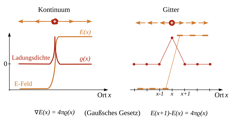
Gauge theories form the theoretical foundation of our understanding of many fields of science, in particular elementary particle physics and nuclear physics. They are, however, extremely difficult to treat with conventional methods such as analytical …
-
Data re-uploading with a single qudit
Noah L. Wach, Manuel S. Rudolph, Fred Jendrzejewski, and Sebastian Schmitt
Quantum Mach. Intell. 5, 36 () | arXiv:2302.13932 [quant-ph]Quantum two-level systems, i.e. qubits, form the basis for most quantum machine learning approaches that have been proposed throughout the years. However, in some cases, higher dimensional quantum systems may prove to be advantageous. Here, we …
-
Strong laser physics, non-classical light states and quantum information science
Utso Bhattacharya, Theocharis Lamprou, Andrew S. Maxwell, Andrés F. Ordóñez, Emilio Pisanty, Javier Rivera-Dean, Philipp Stammer, Marcelo F. Ciappina, Maciej Lewenstein, and Paraskevas Tzallas
Rep. Prog. Phys. 86 094401 () | arXiv:2302.04692 [quant-ph]Strong–laser–field physics is a research direction that relies on the use of high-power lasers and has led to fascinating achievements ranging from relativistic particle acceleration to attosecond science. On the other hand, quantum optics has been …
-
Enhancing Qubit Readout with Autoencoders
Piero Luchi, Paolo E. Trevisanutto, Alessandro Roggero, Jonathan L. DuBois, Yaniv J. Rosen, Francesco Turro, Valentina Amitrano, and Francesco Pederiva
Phys. Rev. Applied 20, 014045 () | arXiv:2212.00080 [quant-ph]In addition to the need for stable and precisely controllable qubits, quantum computers take advantage of good readout schemes. Superconducting qubit states can be inferred from the readout signal transmitted through a dispersively coupled resonator. …
-
Solving the Optimization Problem of Bidirectional EV-Charging on a Quantum Computer
Daniel Müssig, Marika Federer, Steve Lenk, and Jörg Lässig
Proceedings of 23. Nachwuchswissenschaftler*innenkonferenz ()The optimization problem of bidirectional electrical vehicle charging (Vehicle-to-Home) becomes more and more important with rising energy prices and the required reduction of CO2 emissions. We maximize the usage of local solar power generation, …
-
Engineering random spin models with atoms in a high-finesse cavity
Nick Sauerwein, Francesca Orsi, Philipp Uhrich, Soumik Bandyopadhyay, Francesco Mattiotti, Tigrane Cantat-Moltrecht, Guido Pupillo, Philipp Hauke, and Jean-Philippe Brantut
Nat. Phys. 19, 1128-1134 () | arXiv:2208.09421 [cond-mat.quant-gas]All-to-all interacting, disordered quantum many-body models have a wide range of applications across disciplines, from spin glasses in condensed-matter physics over holographic duality in high-energy physics to annealing algorithms in quantum …
-
Quantum error correction with gauge symmetries
Abhishek Rajput, Alessandro Roggero, and Nathan Wiebe
npj Quantum Inf 9, 41 () | arXiv:2112.05186 [quant-ph]Quantum simulations of lattice gauge theories (LGTs) are often formulated on an enlarged Hilbert space containing both physical and unphysical sectors in order to retain a local Hamiltonian. We provide simple fault-tolerant procedures that exploit …
-
Importance sampling for stochastic quantum simulations
Oriel Kiss, Michele Grossi, and Alessandro Roggero
Quantum 7, 977 () | arXiv:2212.05952 [quant-ph]Simulating complex quantum systems is a promising task for digital quantum computers. However, the depth of popular product formulas scales with the number of summands in the Hamiltonian, which can therefore be challenging to implement on near-term …
-
Slow dynamics of a mobile impurity interacting with an Anderson insulator
Piotr Sierant, Titas Chanda, Maciej Lewenstein, and Jakub Zakrzewski
Phys. Rev. B 107, 144201 () | arXiv:2212.07107 [cond-mat.dis-nn]We investigate dynamics of a single mobile impurity immersed in a bath of Anderson localized particles and focus on the regime of relatively strong disorder and interactions. In that regime, the dynamics of the system is particularly slow, …
-
Compilation of Entangling Gates for High-Dimensional Quantum Systems
Kevin Mato, Martin Ringbauer, Stefan Hillmich, and Robert Wille
APSDAC ‘23: Proceedings of the 28th Asia and South Pacific Design Automation Conference () | arXiv:2301.04155 [quant-ph]Most quantum computing architectures to date natively support multi-valued logic, albeit being typically operated in a binary fashion. Multi-valued, or qudit, quantum processors have access to much richer forms of quantum entanglement, which promise …
-
Non-Abelian gauge invariance from dynamical decoupling
Valentin Kasper, Torsten V. Zache, Fred Jendrezejewski, Maciej Lewenstein, and Erez Zohar
Phys. Rev. D 107, 014506 ()Lattice gauge theories are fundamental to such distinct fields as particle physics, condensed matter or quantum information theory. The recent progress in the control of artificial quantum systems already allows for studying Abelian lattice gauge …
2022
-
Measurement-induced phase transitions in (d+1)-dimensional stabilizer circuits
Piotr Sierant, Marco Schirò, Maciej Lewenstein, and Xhek Turkeshi
Phys. Rev. B 106, 214316 () | arXiv:2210.11957 [cond-mat.stat-mech]The interplay between unitary dynamics and local quantum measurements results in unconventional nonunitary dynamical phases and transitions. In this paper we investigate the dynamics of (d+1)-dimensional hybrid stabilizer circuits, for d=1, 2, 3. We …